UrgentIQ
UrgentIQ builds the EHR software urgent care centers run their day on, a single interoperable system meant to replace the patchwork of scheduling, charting, and billing tools most clinics stitch together out of necessity.
Urgent care doesn't run on a predictable schedule. A quiet Tuesday morning can turn into a packed waiting room by four in the afternoon, and the software underneath has to absorb that swing without slowing anyone down. When UrgentIQ came to us, theirs couldn't. Documentation took long enough to bottleneck the whole clinic. Scheduling had no real give for walk-ins or sudden surges. Providers were losing time to the system instead of gaining it back, on exactly the kind of shift where every minute is visible to a waiting room full of people. We were brought in to rebuild patient intake, scheduling, and clinical documentation from the ground up.
Year
2025
Client
UrgentIQ
Services
Product Design, UX Research, Design System, EHR/EMR Design
Project goals
We treated this as an MVP from day one on purpose, a deliberately narrow first version that could go live fast and improve against real clinic usage rather than our best guess at what urgent care staff needed.
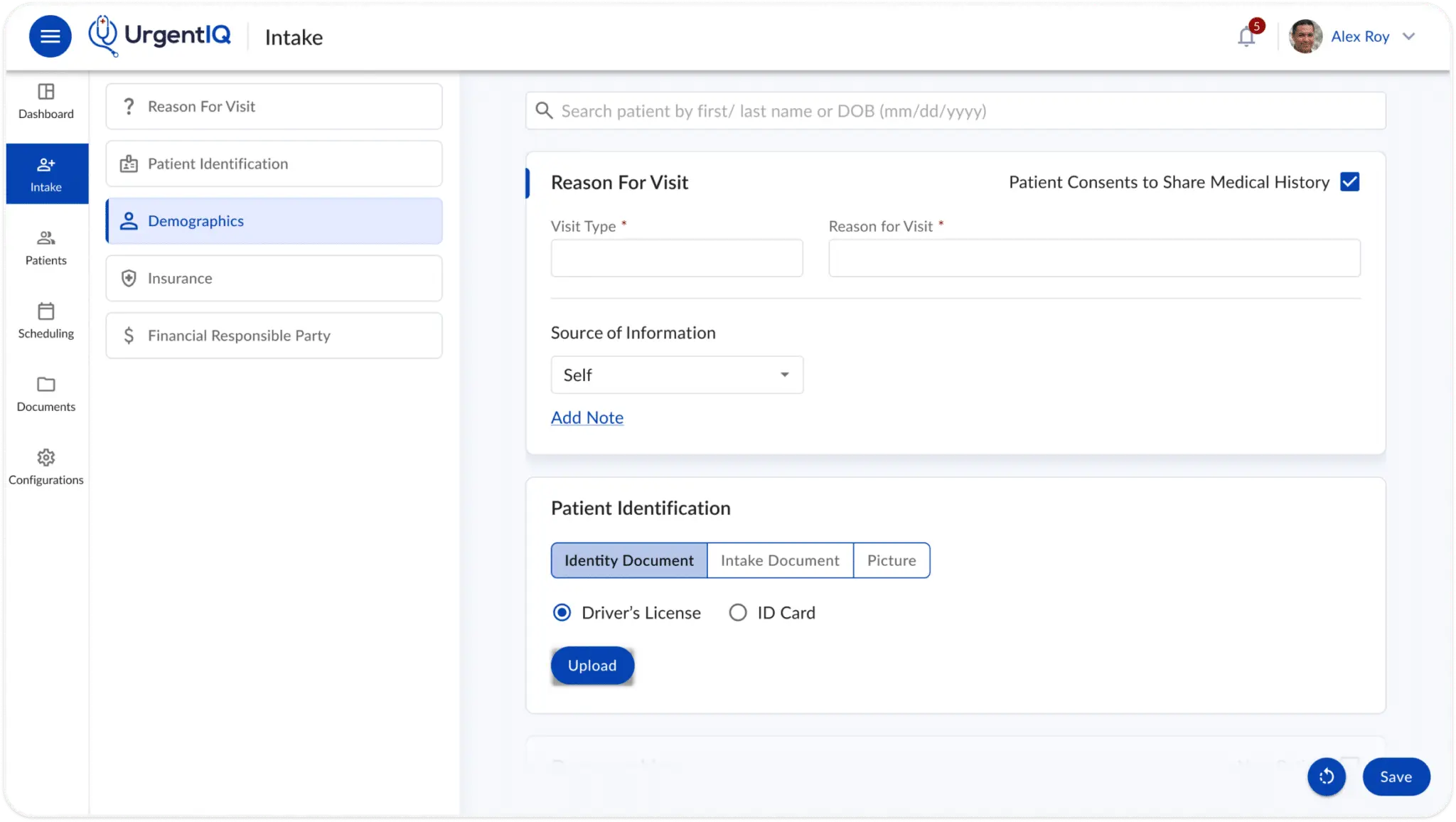
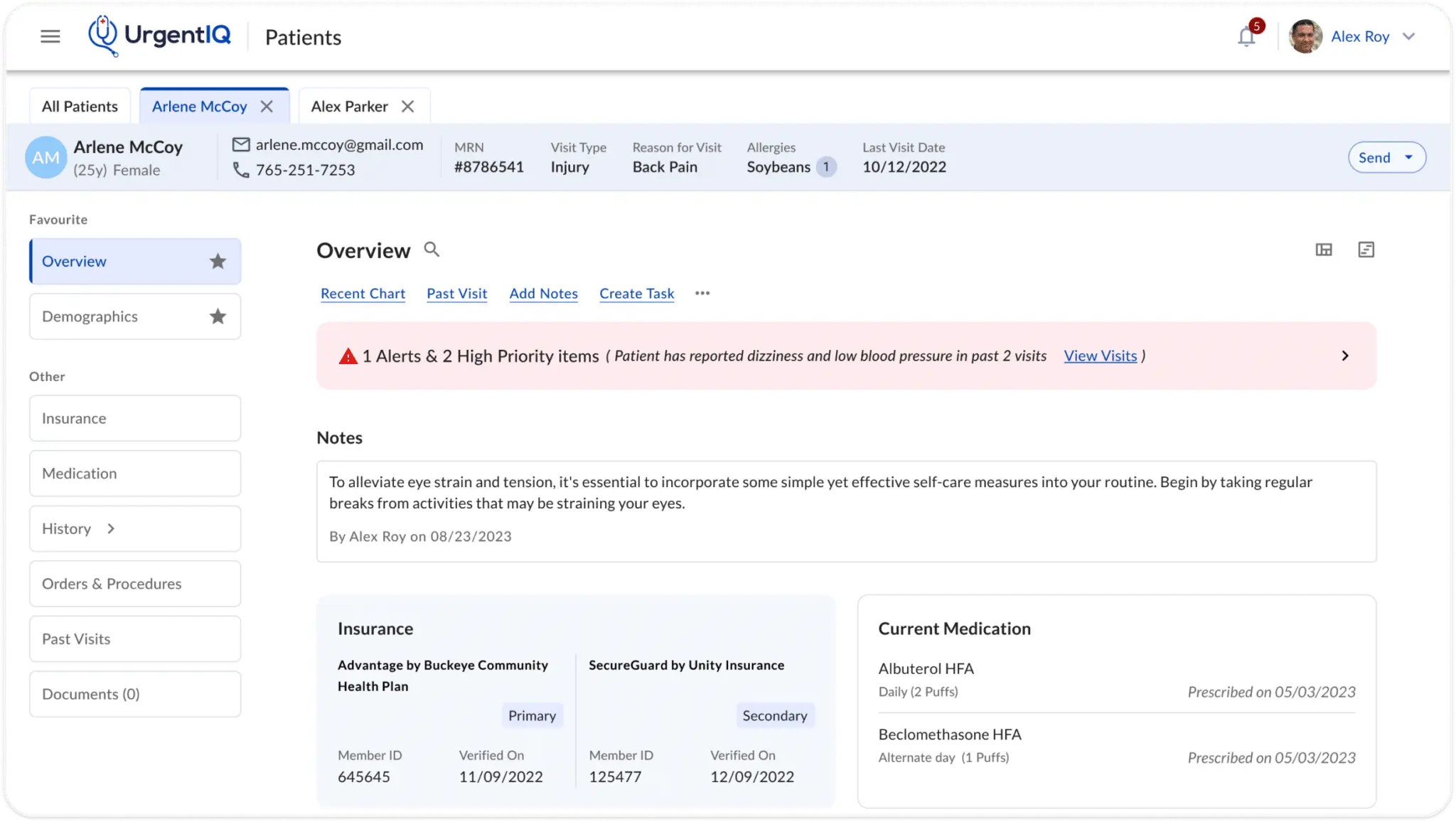
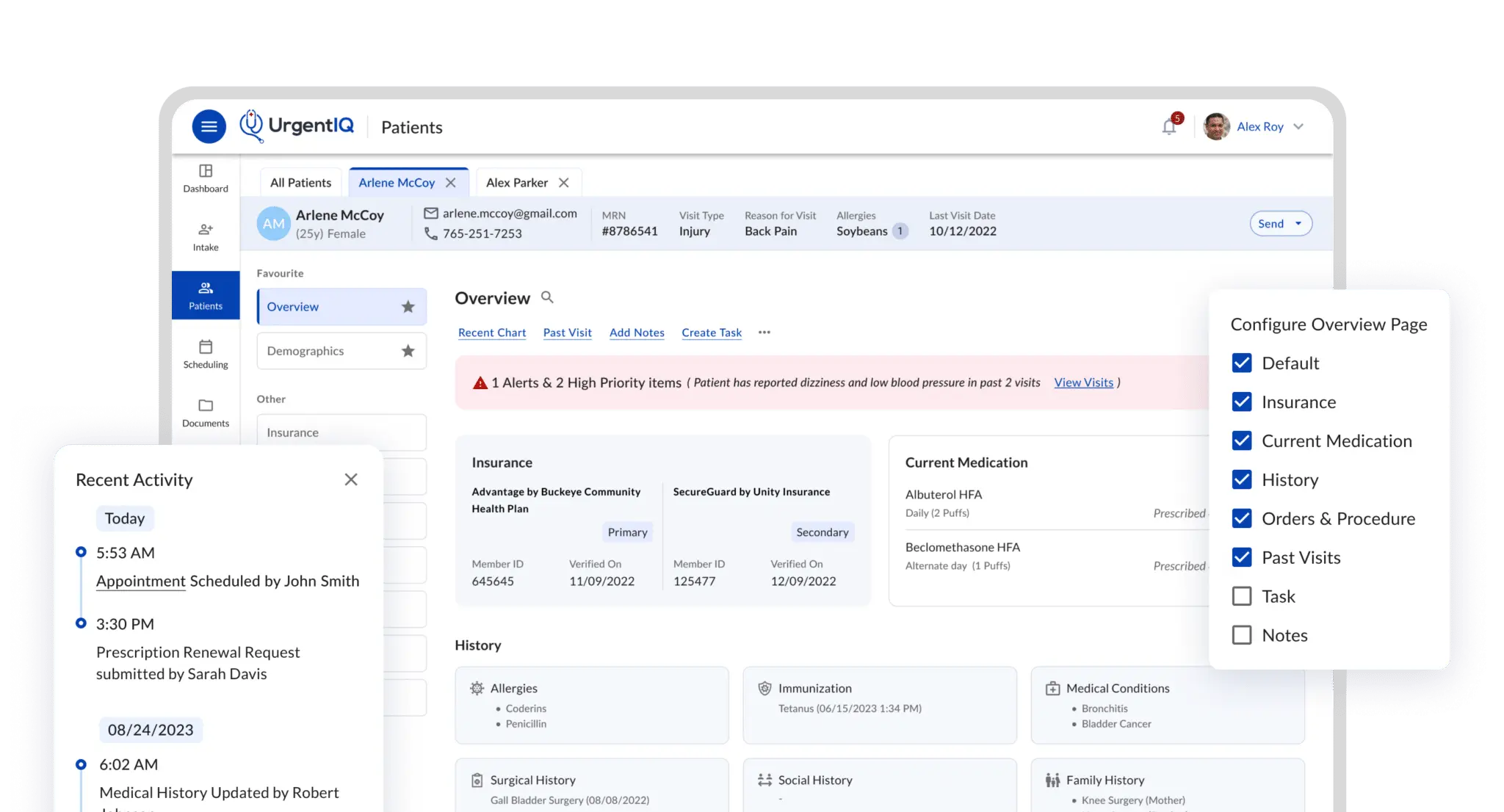
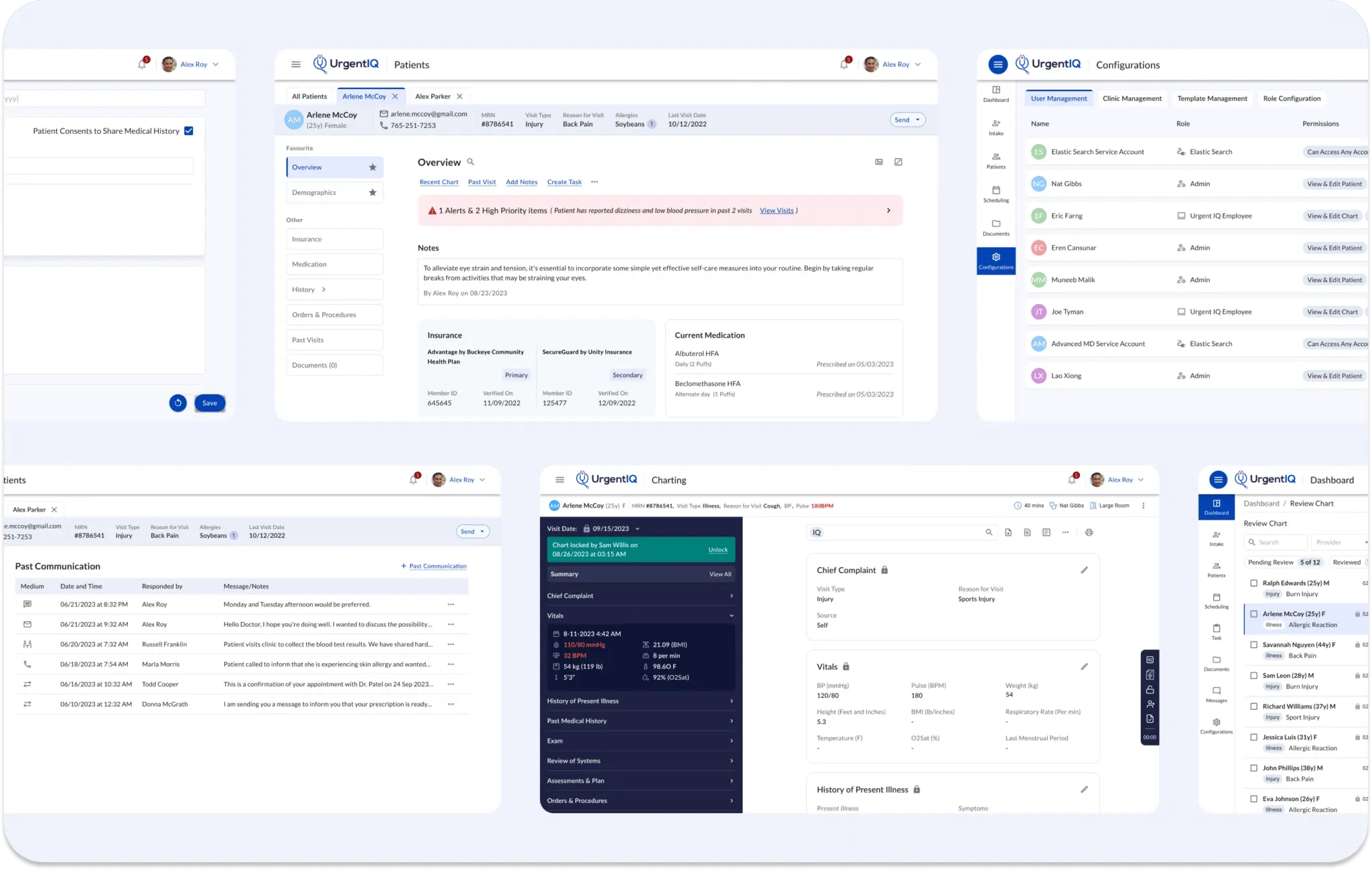
Phase one targeted front desk admins, the people handling intake, scheduling, and the first pass of documentation for every patient who walks through the door. The core modules were built around that job specifically: a Patient List for managing everyone in the clinic at once, full Patient Profiles for medical history and treatment tracking, a scheduling system designed to absorb walk-ins rather than fight them, and the configuration layer underneath holding it together.
Before any screen got drawn, we ran a SWOT analysis across the EMR systems already competing in urgent care. The strongest shared three things in common: AI built into the actual workflow instead of bolted on afterward, design shaped around how clinicians move through a shift rather than how a database wants to be organised, and enough flexibility to fit clinics of different sizes. The gap we found sat squarely in documentation speed and scheduling rigidity, and that gap became UrgentIQ's opening.
Phase two shifted the primary audience to clinicians and nurses once UrgentIQ had soft-launched and real usage data to design against. Charting picked up AI-assisted SOAP documentation, integrated e-fax and e-prescribing, smart diagnosis search, role-based permissions, voice dictation, and computer-assisted coding. Alongside the new features, we rebuilt the design foundation itself: adopting Material Design as the system's base for long-term scalability, auditing and standardising every phase-one screen against it, and only then building new modules on top of a library that could actually hold the product's growth.

Result
The clearest signal came straight from the clinics: front desk teams on the redesigned system now manage eight more patients a day without the shift feeling more rushed, a direct result of intake and scheduling finally matching how urgent care actually moves.
On the clinical side, AI-powered SOAP-method documentation cut down the time providers spend writing up a visit, with e-fax, e-prescribing, and lab ordering built into the same flow instead of scattered across separate logins. Standardising the interface on Material Design gave UrgentIQ a foundation that scales cleanly as new modules get added, rather than a growing pile of one-off screens that get harder to maintain with every release. What started as a lean first version is now the system urgent care centers depend on to get through their busiest days.