Strategy
Why companies choose agency retainers over building an in-house team
A senior in-house hire costs north of $200k fully loaded. A retainer starts near $4k a month. Here's the actual math, and when hiring wins.
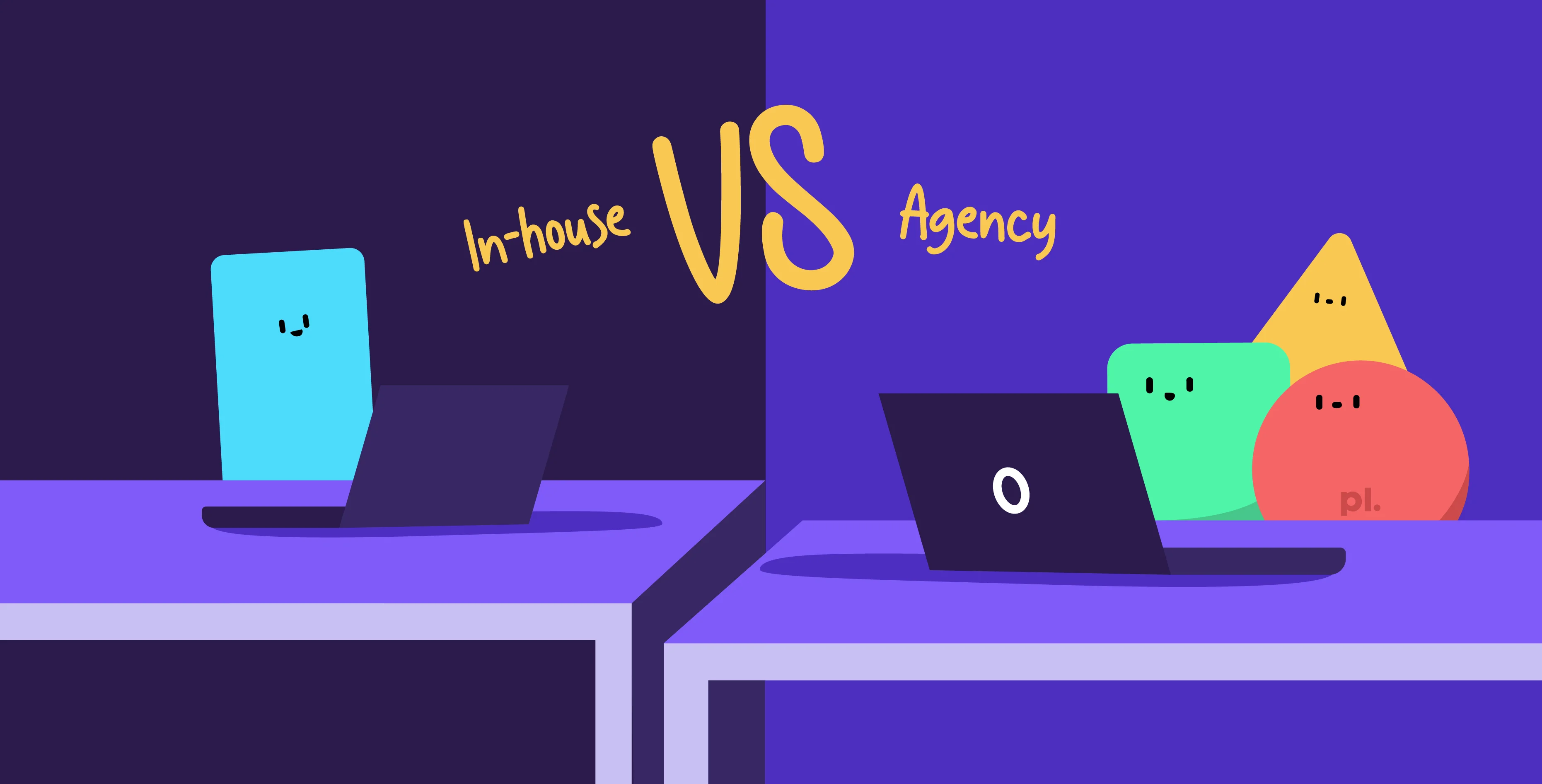
Run the numbers before you run the argument.
Say you hire one senior product designer in the US. Base salary somewhere around $150,000, depending on the market. Add payroll taxes and benefits, roughly a quarter on top. Add a recruiter fee if you use one, commonly a fifth of first-year salary. Add equity, software seats, and hardware. Then add the two to three months before they're producing at full speed, which you pay for and don't get output from.
Fully loaded, that one person costs meaningfully north of $200,000 a year. Call it $17,000 a month for a single discipline.
A retainer with a studio starts around $4,000 a month and covers several.
That gap is the whole argument, and it's worth understanding where it comes from before you act on it.
One hire rarely covers the work
Product work spans research, UX, interface design, front-end, and back-end. A designer doesn't build. A front-end developer doesn't do discovery. Getting the range in-house means several hires, each a fixed cost you carry in the months when there isn't enough of their specific work to fill the week.
A retainer flexes. Heavy UX in March, heavy front-end in April, and the mix changes without a hiring round or a difficult conversation.
Hiring is slow in a way that compounds
A good senior designer takes months to find, and that's before notice periods. During those months, the work you needed them for isn't happening.
A retainer produces output in days, because the team is already assembled and already senior. When your needs shrink, you scale the engagement down. Nobody gets laid off because you had an optimistic quarter.
The cost nobody puts in the spreadsheet
An in-house team needs managing. One-to-ones, career conversations, workload balancing, performance reviews, morale. At an early-stage company that time comes out of a founder, usually one who'd rather be selling or building.
Nobody prices that when comparing a salary to a monthly fee, and it's real.
Where the maths flips
In-house wins eventually, and we'd rather say so than pretend otherwise.
When design and engineering sit at the centre of your product, when you need people in daily decisions with deep domain fluency, when the work is genuinely constant, fixed headcount becomes cheaper and better than any external arrangement. The utilisation argument that favoured the retainer starts favouring the hire.
The common path is both, in sequence. A retainer while the work is variable and speed matters most, then hiring in as it becomes steady and central enough to justify the overhead. Getting the order wrong, hiring three people for work that hasn't stabilised yet, is an expensive way to learn this.
The question worth asking
Not "can we afford a retainer" but "is this work constant yet?"
If the honest answer is no, or not for another year, a retainer buys you a broader team, sooner, for less, while you find out.